
5 Minuty
Police drones are watching: why one stop may not be enough
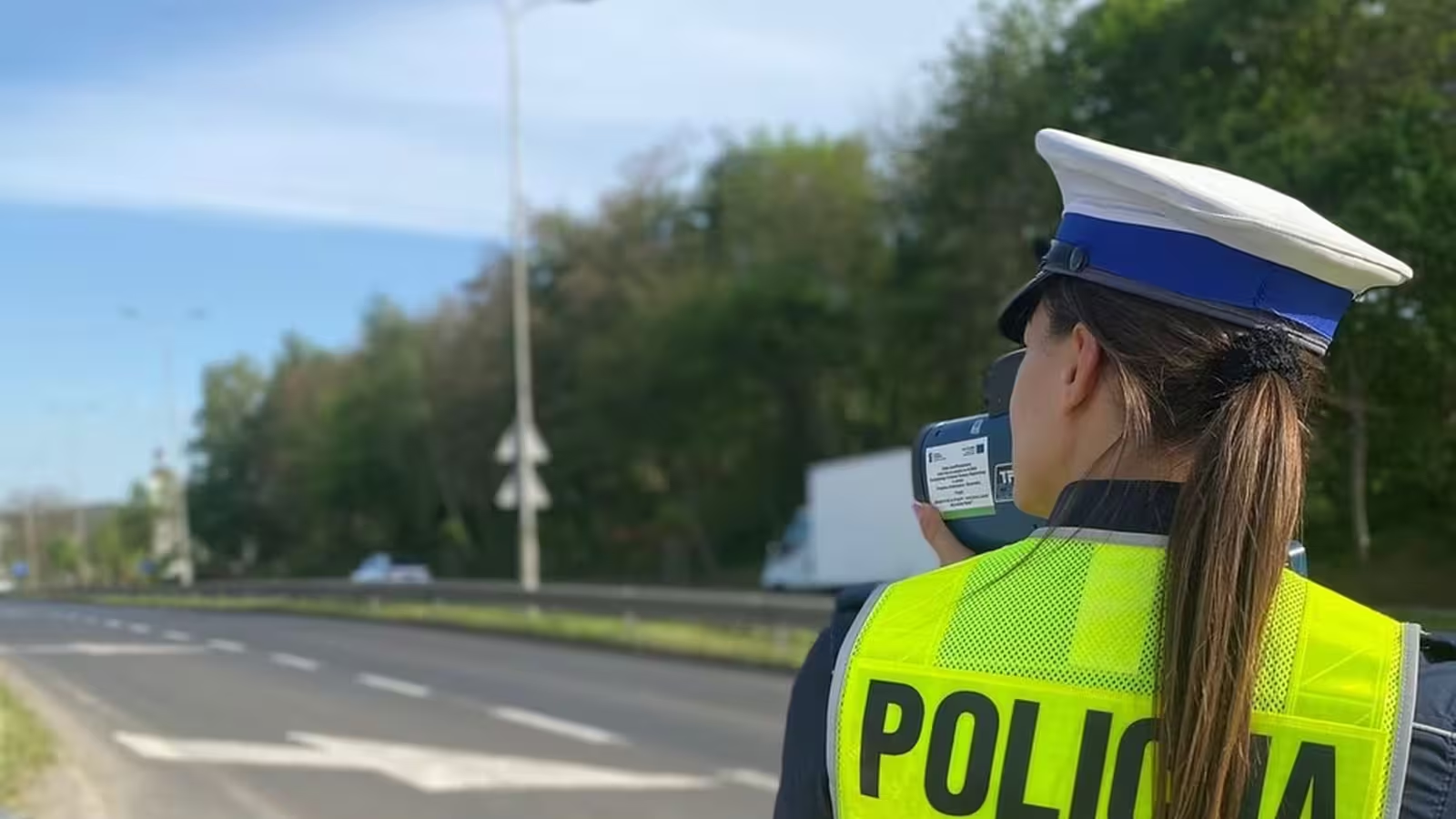
Polish police use increasingly sophisticated methods to enforce traffic rules. One of the newest tools are drones patrolling intersections with B-20 stop signs. These aerial inspections catch drivers who don’t stop at all — and just as often those who stop only once when the law requires additional, momentary stops. This article explains exactly where and how to stop to avoid a fine, how long a full stop must last, and what modern vehicle features can help you comply. If you care about car safety, braking performance, and avoiding points on your license, read on.
Where to stop: the P-12 line and alternatives
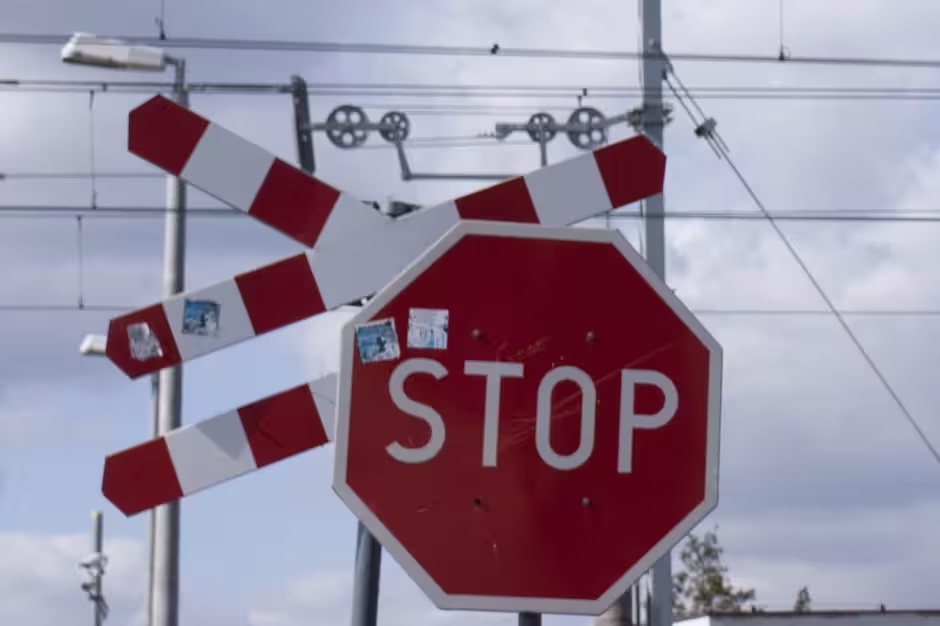
If an intersection has a stop sign, stopping is mandatory regardless of visibility, time of day, or whether you are sure no other vehicle is approaching. The legal stopping place is always the bold white stop line — a horizontal traffic marking called P-12. If the P-12 line is missing (not common, but possible), stop at the point where you will have a clear view of the whole intersection before proceeding. For stop signs placed before a level crossing, the stopping point is defined by the St. Andrew’s cross (krzyż św. Andrzeja).
Complete stop: what counts
Polish regulations do not stipulate an exact number of seconds for a stop at a B-20 sign. Instead, the driver must meet two obligations: 1) a complete stop — the vehicle must not roll or creep forward even slightly, and 2) ensure no vehicle or road user is approaching such that moving on would create danger. Only after those conditions are satisfied may you proceed. Police operators — including drone crews — treat “complete stop” literally and are strict: any ongoing motion may be recorded and penalized.
When you must stop more than once
Many drivers assume that if the car in front stopped, then their stop is effectively done. That’s a mistake. If you were forced to brake because the vehicle ahead paused behind the P-12 line, you still must make a separate, independent complete stop at the line when it’s your turn to enter the intersection. In other words, a stop caused solely by traffic queues or another vehicle’s braking does not replace your own legal duty to stop at the marked line and check for hazards.
Stop sign and traffic lights: which takes precedence?
Traffic signals (red/green lights) outrank road signs. If a stop sign hangs above a lighted junction but the lights are functioning normally, the green light allows you to proceed without stopping for the B-20 sign. Stop signs at signalized intersections are usually there for use when signals fail or are turned off (for example at night or during maintenance). If lights are out, the stop sign rules apply.
Penalties: money and points
Failing to stop at a stop sign in Poland is fined at 300 zł. Equally or more important for drivers is the penalty of eight demerit points — a severe consequence when repeat offences can lead to losing one’s license. Historically, enforcement relied on roadside police, but aerial surveillance and drone footage allow officers to detect violations even when no patrol car is on site. That increases both detection rates and driver accountability.
Vehicle technology, braking specs and how car choice affects compliance
Choosing a car with modern safety and comfort features makes it easier to comply with stop sign rules and avoid penalties. Key vehicle specs and systems relevant to safe stopping at STOP signs include:
- Brake system performance (ABS, electronic brakeforce distribution) — better braking reduces stopping distances and improves control during a full stop.
- Automatic Hold / Hill Hold Assist — prevents creeping after you’ve briefly released the brake; useful when executing a literal complete stop.
- Advanced Driver Assistance Systems (ADAS) — features like traffic sign recognition, forward collision warnings and autonomous emergency braking (AEB) can alert drivers to upcoming stop signs and reduce the chance of accidental roll-throughs.
- Dashcams and connected car telematics — recordable evidence can protect drivers if enforcement disputes arise, but rely on legal guidelines for evidence use.
Design and performance comparisons
Smaller compact cars typically have shorter stopping distances than heavier SUVs at the same speed, due to lower mass and often lighter braking loads. However, many modern SUVs and crossovers come equipped with high-performance brakes, regenerative braking systems (in hybrids/EVs), and advanced stability control that narrow the performance gap. When comparing models, look at brake rotor/disc size, brake pad composition, weight distribution, and published stopping distances from 50 or 80 km/h for realistic benchmarks.
Market positioning and safety: why it matters
Vehicle manufacturers increasingly emphasize safety features in marketing and positioning. Brands that promote ADAS suites and high Euro NCAP ratings are targeting buyers who value both crash protection and everyday convenience—features that help drivers comply with traffic law and avoid fines. If avoiding penalties and minimizing risk is a priority, consider cars in segments that offer advanced safety packs as standard rather than as optional extras.
Practical tips for drivers
- Always stop fully at the P-12 line or the visible stopping point; don’t rely on the car ahead as a substitute stop.
- Keep the car in gear with the handbrake or Auto Hold engaged if available to ensure a literal standstill.
- Use traffic sign recognition and forward-collision alerts if your car has them; they materially reduce the risk of an unnoticed stop sign.
- Remember: if traffic lights are blacked out, obey the posted stop signs.
In short, police drone operations have made stop-sign enforcement more efficient — and more unforgiving. Combining good driving habits with the right vehicle technology and understanding the legal rules (P-12 line, complete stop, multiple mandatory stops) is the best way to avoid fines, demerit points, and potentially dangerous situations at intersections.
Źródło: auto-swiat
Zostaw komentarz